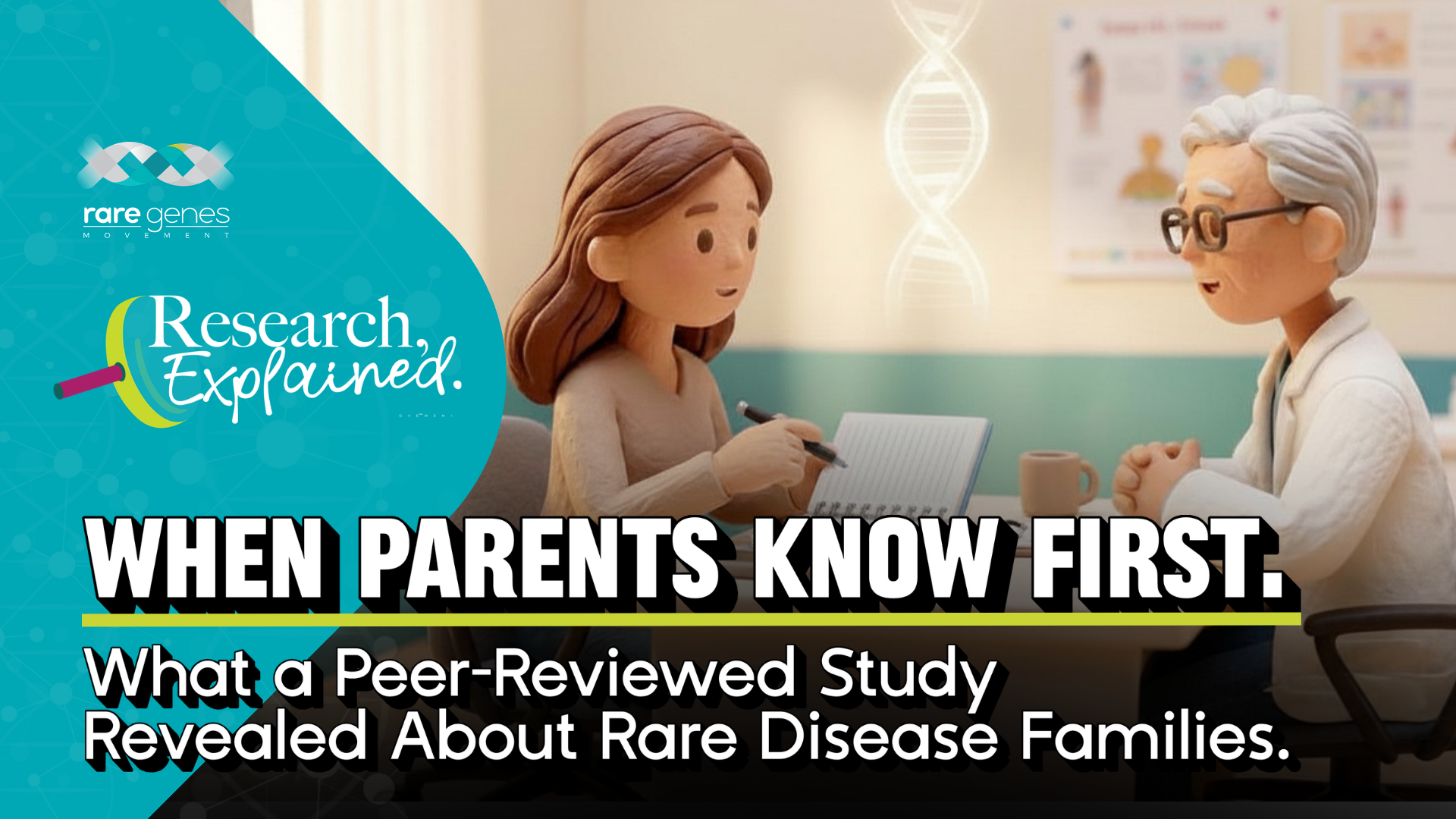
A plain-language summary of peer-reviewed research… for families navigating a lot already.
About this series: Research, Explained is a blog series by Rare Genes Movement that translates peer-reviewed rare disease research into plain language— for families who are navigating a lot already and don’t have time to decode a medical journal.
What Was Studied
Researchers interviewed seven families who arrived at their genetics appointments already suspecting… and in these cases correctly identifying… their child’s rare genetic diagnosis.
The study explored:
- How families recognized something was wrong
- How they searched for answers (often online)
- What happened when they brought those suspicions to medical providers
- The emotional journey before, during, and after diagnosis
This was a qualitative study using one-hour interviews to understand lived experience, not to measure clinical outcomes.
What Researchers Found
Parents often knew something was wrong before anyone else did.
Many described subtle concerns: development, movement, facial differences, feeding issues, regression. They saw daily patterns that short clinic visits could not capture. One mother explained that she could see “little nuances” providers could not see in a 30-minute visit.
The emotional burden before diagnosis was significant.
Families described guilt (“What did I do wrong?”), blame from others or even providers, isolation, fear, and desperation for answers. One parent described being relieved when leukemia was ruled in… simply because it would have provided a path forward. That’s how painful the “not knowing” can be.
Some families were dismissed… or even accused.
In two cases, families were wrongly suspected of abuse before the genetic cause was identified. This underscores how easily rare presentations can be misunderstood when providers are unfamiliar with specific conditions.
Online research sometimes led to correct diagnoses.
Several parents identified their child’s condition through Google searches, rare disease image searches, social media, and online communities. In each of the seven cases studied, the family’s suspicion was confirmed through genetic testing.
Diagnosis brought relief… even when the condition was serious.
Parents described feeling “ecstatic” to finally have a name. Relief from self-blame. Freedom in being able to explain their child’s condition to others. A clearer path for care. Researchers describe this as an emotional odyssey, not just a diagnostic one.
Why This Matters for Families
This research validates something many rare families already know:
This is for you
You are not “overreacting.”
You are not “Google diagnosing.”
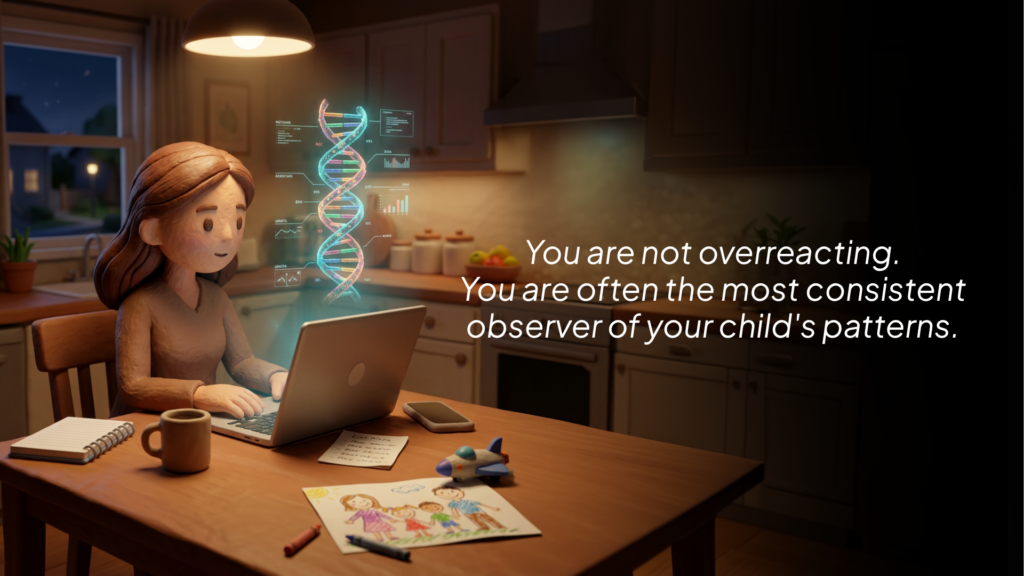
You are often the most consistent observer of your child’s patterns.
The study does not suggest replacing providers with internet research. It suggests something more important: the strongest care happens when families and providers work as partners.
Parents bring lived experience.
Providers bring medical expertise.
Both matter.
What This Means for the Medical Community
The authors recommend that genetics providers:
- Remain open to information families bring
- Avoid dismissing parent-led research outright
- Recognize that caregivers may have access to critical observations
- Build collaborative alliances with families
Questions You Might Bring to Your Care Team
If you are navigating diagnosis:
- I’ve been tracking patterns at home… can we review them together?
- Are there genetic conditions that match this symptom cluster?
- Would genetic testing help clarify next steps?
- If this diagnosis is ruled out, what is the next most likely category to explore?
- Is there a genetics specialist we should consult?
If you are already diagnosed:
- What systems should we monitor over time?
- What baseline testing is recommended?
- Are there related conditions we should be aware of?
- What specialists should be involved early?
What This Article Does Not Say
- It does not say internet research is always correct.
- It does not suggest families should self-diagnose without medical guidance.
- It does not recommend bypassing providers.
It highlights that collaboration matters… especially in rare disease.
A Note from Rare Genes Movement
This study reinforces something we see every day:
Behind every rare diagnosis is not just a medical chart… there is a parent carrying guilt, questions, and responsibility.
Clarity reduces fear.
Partnership reduces isolation.
Listening builds trust.
And trust changes everything.
Peer-Reviewed Source
Slocum RB et al. Listening to Patients with Suspected Genetic Diagnoses: A Narrative Perspective. American Journal of Medical Genetics Part C: Seminars in Medical Genetics. Wiley, 2023.
This post is for informational purposes only and does not constitute medical advice. Always consult a qualified healthcare provider regarding diagnosis, treatment, or any medical decisions for yourself or your child.